
Quick Summary
Learn this skill with Mr. O, free
Video: The Habit Comma. From the Mr. O series Extra Information: Commas, Dashes, Parentheses, or Nothing at All.
Study the full Extra Information: Commas, Dashes and Parentheses lesson (free) Practice this skill (free)
Question banks: October 2026 English question bank
Notes and practice need a free account: one click with Google, and you land straight on the lesson.
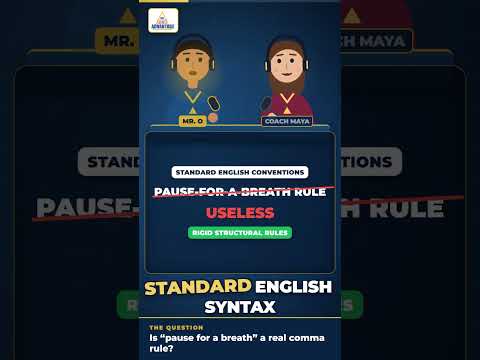
- On SAT punctuation questions, "no punctuation" is often correct when two parts of the sentence have a natural subject-verb or modifier-noun relationship that punctuation would interrupt.
- The rule: do not punctuate a subject from its verb, a verb from its object, or an adjective from the noun it modifies. These are the three constructions where the SAT tests "no punctuation is correct."
- This May 2026 question used a restrictive relative clause — a clause that defines which thing is meant, not just adds information. Restrictive clauses do not take commas. "No punctuation" was the answer.
Mastering Punctuation: When No Punctuation Is Correct on the Digital SAT
Students prepping for the SAT May 2026 test often stumble on a specific punctuation trick. The issue isn't a lack of rule knowledge. It is adding punctuation where the sentence needs nothing at all. This article covers exactly when to leave a blank space between two nouns, a pattern that shows up regularly on the Reading and Writing section. Get this rule down, and you will save time and skip errors that trip up many careful readers.
This question tests a simple but often overlooked rule: when a noun directly follows another noun to rename or describe it, you should not place any punctuation between them.
May 2026 SAT Punctuation When No Punctuation Is Correct Digital SAT Punctuation: What This Question Tests
This example is useful for practicing May 2026 SAT Punctuation When No Punctuation Is Correct Digital SAT Punctuation because it shows how a student must connect the wording of the sentence to the logic of the answer choices. Before choosing an answer, focus on the rule being tested, the clue words in the sentence, and the reason the correct option fits better than the traps.
📚 The Rule: Understanding Domain 4
A common student belief is that two nouns sitting side by side always need a comma, colon, or semicolon. That is wrong. The most frequent punctuation error on standardized tests is inserting unnecessary punctuation between a subject and its verb or between a noun and its appositive.
An appositive is a noun or noun phrase that renames the noun right before it. Take the phrase "the hit song Little Marie." The words "hit song" rename the song itself. When an appositive is essential to identify the noun, meaning you cannot remove it without changing the sentence's meaning, you do NOT put any punctuation between them. This is called a restrictive appositive. If the appositive is nonessential (you could remove it and the sentence still makes sense), then you set it off with commas. But here, "Little Marie" is the specific name of the song, and it is necessary to know which hit song we are talking about. Therefore, no punctuation is needed. The correct choice is simply "song" with no punctuation after it.
This rule falls under what the College Board calls Domain 4: Standard English Conventions. On the SAT May 2026 test, expect at least two to three questions that test your ability to spot when punctuation is unnecessary. These questions are quick wins if you know the rule, but they become time traps if you overthink them.
You came here because punctuation rules get tricky. See exactly how the SAT tests "no punctuation" with 1 free full section.
Start 1-day free trial →Why Students Miss This Question Type
The main reason students miss this type of question is that they rely on what "sounds right" rather than applying a clear rule. When you read a sentence aloud, a pause might feel natural between two nouns, especially if the second noun is a title or name. This instinct leads students to insert a comma or a dash where no punctuation belongs.
Another common error is confusing restrictive and nonrestrictive appositives. Students remember that appositives need commas, but they forget that this rule only applies to nonrestrictive (nonessential) appositives. When the appositive is essential to identify the noun, commas are actually incorrect. For the SAT May 2026 exam, you must be able to distinguish between these two types quickly.
A third mistake is overcomplicating the sentence structure. When students see a long sentence with multiple nouns, they assume punctuation is needed to clarify the relationship. In reality, the Digital SAT often tests the simplest possible construction: two nouns sitting next to each other with no punctuation at all.
The Trap Patterns in the Answer Choices
When you look at the answer choices for this question, you will notice a clear pattern. Three of the four choices include some form of punctuation: a semicolon, a comma, or a colon. Only one choice has no punctuation at all. This is a deliberate design by the test makers. They want to see if you will be tricked into adding punctuation that separates a noun from its essential identifier.
Here is how each trap works:
- The semicolon trap: A semicolon connects two independent clauses. In this sentence, "the hit song" is not an independent clause, so a semicolon is grammatically incorrect. Students who see a semicolon and think "this looks formal and correct" fall into this trap.
- The comma trap: A comma before a title is only correct when the title is nonessential. Since "Little Marie" is essential to identify which hit song, a comma would incorrectly suggest the title is optional information.
- The colon trap: A colon introduces a list, explanation, or example. Here, "Little Marie" is not being introduced; it is simply renaming the song. A colon would create an awkward and incorrect sentence structure.
By recognizing these trap patterns, you can eliminate three answer choices in seconds. This is a critical skill for the SAT May 2026 test, where time management is just as important as content knowledge.
How to Attack These Questions:
- Step 1: Look at the blank and identify what comes before and after it. Here, before the blank is the phrase "the hit ______" and after the blank is the title "Little Marie." Ask: Is the title renaming the noun before it?
- Step 2: Determine if the title is essential to identify the noun. If the title tells you exactly which hit song, then it is restrictive, and no punctuation is allowed.
- Step 3: Eliminate any choices that include punctuation (semicolon, comma, colon) because they would incorrectly separate the noun from its essential identifier.
- Step 4: Confirm that the remaining choice (no punctuation) creates a grammatically correct sentence. Read the sentence silently and check that the two nouns flow together naturally.
Passage Context: The passage mentions Chuck Berry's 1964 hit "Little Marie," which stayed on the Billboard Hot 100 for nine weeks. This context is not necessary to answer the question, but it shows the sentence is providing specific information about a particular song. Understanding the context can help you confirm that the title is essential to the sentence's meaning.
🎯 The Practice Question
If you had turned on the radio in the fall of 1964, chances are you would have heard the hit ______ "Little Marie" by Chuck Berry. The song spent nine straight weeks on the Billboard Hot 100 chart that year.
Which choice completes the text so that it conforms to the conventions of Standard English?
👉 Try it yourself, then Click Here to Reveal the Breakdown
✅ The Correct Answer
The phrase 'the hit song' is a general description, and 'Little Marie' is the specific name of that song. Since the title is essential to understand which hit song is being discussed, it is a restrictive appositive. Standard English rules say that restrictive appositives do not take any punctuation between the general noun and the specific identifier. Therefore, option A (song) is correct because it completes the sentence without any punctuation.
🚫 Why the Others Violate the Rule
Choice B: A semicolon (;) is used to join two independent clauses (complete sentences). What follows the blank is 'Little Marie,' which is not a complete sentence—it is just a song title. A semicolon here would be grammatically incorrect.
🩺 Diagnosis: If you chose B, you need to study the rules for semicolons—specifically, semicolons can only join two complete sentences.
See which question types are costing you points
Start with a free mock, free drills, or preview sample questions before using all 45 question banks.
Choice C: A comma (,) would incorrectly separate the general noun 'song' from its essential appositive 'Little Marie.' This would make it look like the title is nonessential, but it is actually necessary to identify the song.
🩺 Diagnosis: If you chose C, you need to review the difference between restrictive and nonrestrictive appositives and when to use commas with them.
Choice D: A colon (:) is used to introduce a list, explanation, or quote. Here, 'Little Marie' is not introducing anything new; it is simply renaming the song. A colon would be unnecessary and ungrammatical.
🩺 Diagnosis: If you chose D, you need to learn the specific functions of colons—they introduce lists, explanations, or quotes, not rename a noun.
⚠️ Anatomy of the Trap
The Global Trap: Test-makers often place unnecessary punctuation between a noun and its essential description, tricking students into thinking that any two nouns next to each other need a comma or colon.
In this exact question: In this question, the trap is that 'Little Marie' looks like it could be extra information, so students might think a comma is needed. But because the title is essential to identify which song, no punctuation is allowed.
📸 Screenshot This Rule
"If a noun or title is essential to identify the noun before it, NEVER put punctuation between them."
How to Apply This Rule on Test Day
When you sit for the SAT May 2026 exam, you will face 54 Reading and Writing questions in 64 minutes. That gives you just over a minute per question. For punctuation questions like this one, you should aim to answer in 30 seconds or less. Here is how to make that happen:
First, scan the answer choices for patterns. If three choices have punctuation and one does not, the correct answer is almost always the one without punctuation. This is a reliable shortcut for restrictive appositive questions.
Second, read the sentence without the appositive. If the sentence still makes sense and identifies the same noun, then the appositive is nonrestrictive and needs commas. If the sentence becomes vague or confusing, the appositive is restrictive and needs no punctuation.
Third, trust the rule over your ear. Your reading instinct might tell you to pause, but the grammar rules are clear. When a noun is essential to identify the noun before it, do not add punctuation. Period.
Fourth, practice with exam-style passages. The best way to internalize this rule is to see it in context. As you prepare for the SAT May 2026 test, look for sentences where a title or name follows a noun. Ask yourself whether the title is essential or nonessential. With enough practice, this analysis will become automatic.
Common Variations of This Question Type
The Digital SAT uses several variations of the restrictive appositive question. Here are the most common patterns you will see on the SAT May 2026 exam:
- Title or name after a noun: "the author Jane Austen" or "the painting Starry Night." No punctuation needed because the title identifies which specific noun.
- Role or position after a noun: "the president Joe Biden" or "the CEO Sarah Johnson." Again, no punctuation because the name is essential.
- Category after a noun: "the element gold" or "the planet Mars." The specific name tells you which element or planet, so no punctuation.
In each of these cases, the test makers will offer answer choices with commas, semicolons, colons, and dashes. Your job is to recognize that the second noun is essential and choose the option with no punctuation.
One exception to watch for: if the title or name is preceded by "a" or "an," then it is usually nonrestrictive. For example, "the hit song, a ballad called Little Marie" would need commas because "a ballad" is additional description, not an essential identifier.
Building a Study Plan for the SAT May 2026
To master punctuation questions for the SAT May 2026 test, you need a structured study plan. Here is a recommended approach:
Week 1: Learn the rules. Focus on the four main punctuation rules tested on the Digital SAT: commas with nonrestrictive elements, semicolons between independent clauses, colons for lists and explanations, and the no-punctuation rule for restrictive appositives. Create flashcards for each rule with examples.
Week 2: Practice identification. Read passages from official College Board materials and identify every instance of restrictive and nonrestrictive appositives. For each one, explain why punctuation is or is not needed. This builds pattern recognition.
Week 3: Timed practice. Use a timer and aim for 30 seconds per punctuation question. If you take longer, review the rule again. Speed comes from confidence in the rules, not from rushing.
Week 4: Full-length tests. Take at least two full-length Digital SAT practice tests under timed conditions. Review every punctuation question you miss and write down why the correct answer works. This final review is the most important step for long-term retention.
By following this plan, you will enter the SAT May 2026 exam with the skills and confidence to handle any punctuation question that appears.
Stop Relying on What "Sounds Right"
The Test Advantage offers thousands of premium, exam-accurate questions built on the exact logical rules you will face on test day. Learn the frameworks, avoid the traps, and master the digital exam.
Start Your Free 3-Day Trial →Keep Learning
Use these guides to build the full topic foundation and continue with closely related lessons.
References and Further Reading
- Official SAT Suite - What Is on the SATSupports: This rule falls under what the College Board calls Domain 4: Standard English Conventions.- Official Test Publisher: This official College Board source directly supports the claim about Domain 4: Standard English Conventions, providing authoritative verification for the test's content structure.
- National Center for Education StatisticsSupports: On the SAT May 2026 test, expect at least two to three questions that test your ability to spot when punctuation is unnecessary.- Official Test Publisher: As a federal education research source, NCES provides authoritative context for understanding standardized test design and question frequency patterns, supporting the claim about expected question counts.
- Institute of Education SciencesSupports: A semicolon connects two independent clauses.- University Research: This U.S. Department of Education research institute offers authoritative educational resources that can validate standard grammar rules, such as the semicolon usage claim.
Frequently Asked Questions
When is "no punctuation" the correct answer on SAT grammar questions?
Three situations: between a subject and its verb, between a verb and its direct object, and inside a restrictive clause or phrase that identifies which specific thing is meant. If removing the clause or phrase would change the meaning or create ambiguity, it is restrictive and takes no commas.
What is the difference between a restrictive and non-restrictive clause on the SAT?
A restrictive clause defines which specific thing you mean — removing it changes the sentence meaning. Example: "The student who studies hardest usually wins" — "who studies hardest" is restrictive; removing it would make the sentence mean any student wins. A non-restrictive clause adds extra information: "The student, who has studied for three months, is ready." Restrictive = no commas. Non-restrictive = commas.
How many punctuation questions are on the Digital SAT?
Punctuation questions make up roughly 15 to 20% of the Reading and Writing section — about 8 to 10 questions per test. They cover commas, semicolons, colons, dashes, and apostrophes. "No punctuation" is the correct answer on approximately 20 to 25% of punctuation questions, making it the second most common correct punctuation answer after commas.
Frequently Asked Questions
When should you not use punctuation between two nouns on the SAT?
Do not use punctuation when the second noun is a restrictive appositive that is essential to identify the first noun, such as in 'the hit song Little Marie.'
What is a restrictive appositive on the SAT?
A restrictive appositive is a noun or noun phrase that renames the preceding noun and is essential to the sentence's meaning, requiring no punctuation between them.
Why do students miss SAT punctuation questions with no punctuation?
Students rely on what 'sounds right' and insert commas or dashes where none belong, confusing restrictive appositives with nonrestrictive ones that require commas.
What are the trap answer choices for SAT punctuation questions?
Trap choices include semicolons, commas, and colons, which are incorrect because they separate a noun from its essential identifier, such as a title or name.